
The Benefits Of Spray Foam Insulation
The Benefits Of Spray Foam Insulation
Insulation is essential for maintaining a comfortable living space, saving energy, and lowering utility costs. Spray foam insulation is one of the most effective insulating products on the market today. Numerous advantages, including increased energy efficiency and better indoor air quality, are provided by this creative solution. This article will discuss the different kinds of spray foam insulation, its functions, its advantages in lofts, and its eco-friendly qualities. Spray foam insulation has a number of advantages, including:
- Energy Savings
- Moisture Management
- A better indoor environment
- Installation convenience.
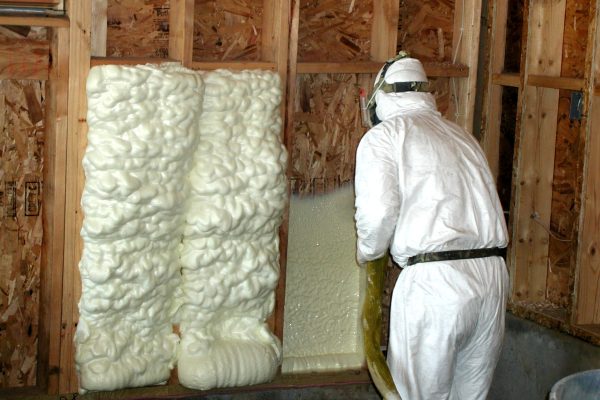
What Are The Different Types Of Spray Foam Insulation
There are two main types of spray foam insulation: open-cell and closed-cell.
Spray Foam Insulation With Open Cells
Spray foam insulation with open cells has a softer, sponge-like texture and is less dense. It is more flexible and has outstanding air sealing properties, making it perfect for filling big spaces and having an expansion capacity of up to 100 times its original volume when used. Open-cell foam is less suited for areas with extreme temperatures since it has a lower R-value (thermal resistance) than closed-cell foam.
Insulation Made Of Closed-Cell Spray Foam
Spray foam insulation with closed cells has a stronger R-value than foam with open cells because of its higher density and rigid structure. The closed-cell structure gives the building better structural stability and is more effective at avoiding moisture incursion. Closed-cell spray foam insulation is frequently advised for use in more challenging conditions where moisture protection and energy efficiency are critical due to its greater thermal resistance and moisture management.
The Operation Of Spray Foam Insulation
Isocyanate and polyol resin make up the two components of spray foam insulation. The chemical reaction between these two ingredients causes the mixture to expand and solidify quickly during the application procedure. Due to its ability to expand, foam can efficiently fill holes, voids, and crevices to provide a smooth barrier that stops heat transfer and air infiltration. The R-value of spray foam insulation, which gauges the substance’s resistance to heat flow, determines the effectiveness of the insulation. The performance of the insulation improves with increasing R-value. As previously discussed, open-cell spray foam often has a lower R-value than closed-cell spray foam, which makes open-cell spray foam less effective at preventing heat transfer and having less overall insulation.